What CFOs Should Prepare For Before 2030
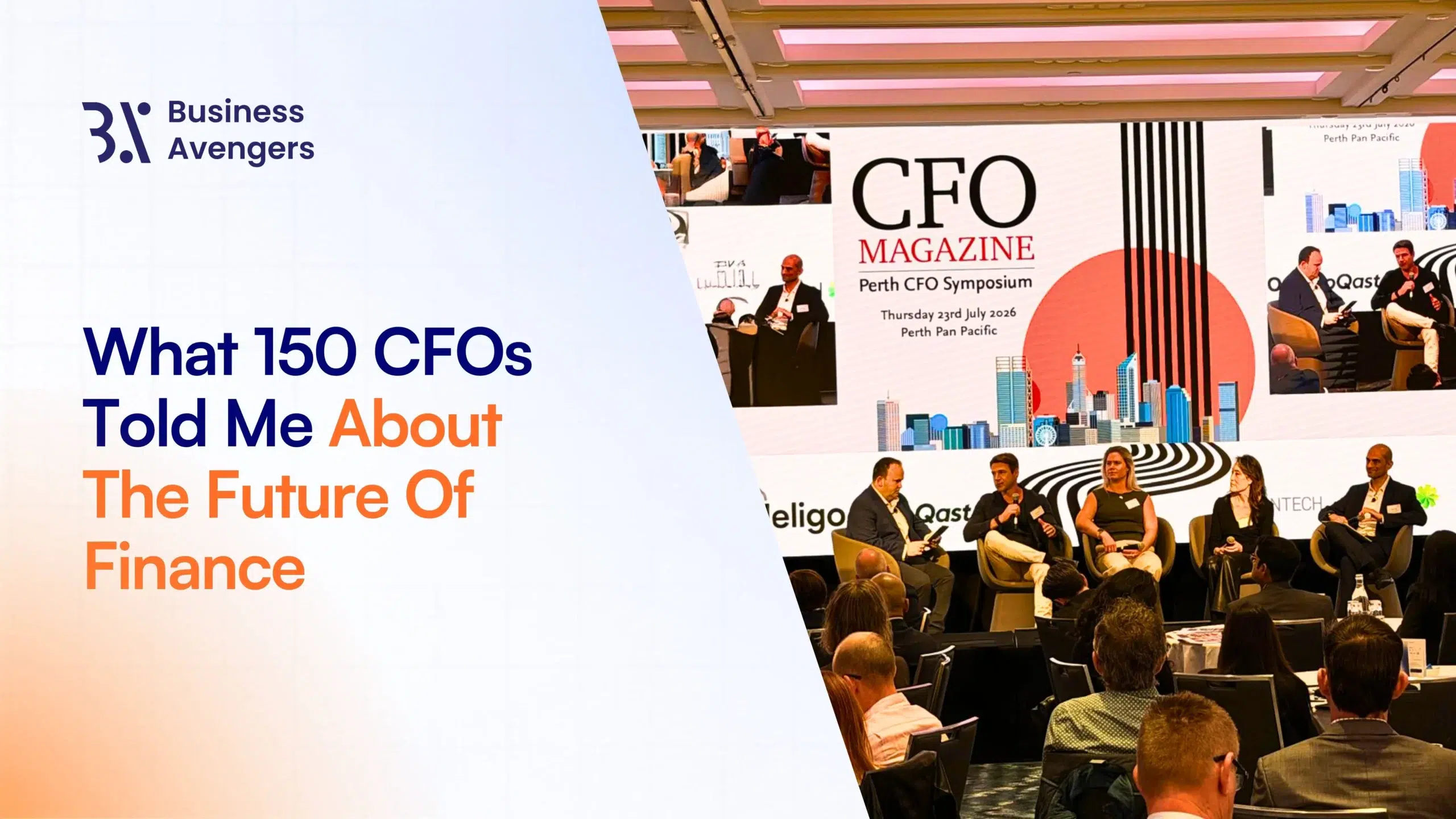
The opening session at the Perth CFO Symposium 2026 framed the entire day around a single idea: the CFO role has changed more in the last five years than in the previous twenty, and the pace isn't slowing down. Panellists spent the morning mapping out what that means across the short, medium, and long term, all the way out to 2030.
We've spent the weeks since pulling that thread through everything else we heard that day, across sessions on AI, outsourcing, leadership, and security. Here's what we think every CFO should be actively preparing for, not eventually, but now, before the decade is out.
1. Your data foundation will decide what you can and can't do
Every conversation about AI, automation, or outsourcing at the Symposium led back to the same starting point: none of it works on messy data. The gap between finance functions that can move fast and the ones that can't won't come down to which tools they bought. It will come down to whether their underlying data was clean enough to use them in the first place.
This isn't a new problem. It's an old problem that's about to get a lot more expensive to leave unsolved. Every AI tool, every automation layer, every outsourcing partnership assumes a baseline of data quality that most finance functions haven't actually built yet. Fixing that now is slower and less exciting than adopting the next tool. It's also the only thing that makes the next tool worth adopting at all.
If that gap hasn't been quantified for your business yet, it's worth starting there before committing budget to anything else.

2. AI will move from "interesting" to "expected"
Right now, most finance leaders are still asking what to do with AI. By 2030, that question will have flipped. Boards won't be asking whether AI belongs in the finance function. They'll be asking why it isn't already embedded, and what's been holding it back.
The finance functions that get ahead of this shift won't be the ones that bought the most tools. They'll be the ones that spent the next few years building real trust in AI output, one reviewed decision at a time, rather than trying to bolt on a fully autonomous system overnight. Trust in AI isn't something you switch on. It's something you earn incrementally, the same way you'd earn it from a new hire: start with low-stakes, well-defined tasks, build a track record, then expand scope.
That's a slower path than the marketing around AI suggests. It's also the only one that actually holds up once real money and real decisions are on the line.
3. Capacity, not headcount, will be the real constraint
The finance leaders getting the most out of their teams today aren't the ones with the biggest headcount. They're the ones who've already started freeing their best people from transactional work, giving them room to grow into forecasting, business partnering, and strategic roles instead of staying permanently buried in transactional accounting and reconciliations.
That shift doesn't happen overnight. It takes years to build the systems, trust, and processes that let a finance team operate that way sustainably. CFOs who start that transition now will be running fundamentally different functions by 2030 than the ones who wait until the pressure forces their hand. The difference won't just be efficiency. It'll be the kind of talent a function is able to attract and retain, because the best finance people increasingly want roles built around judgement, not admin.
4. Security will stop being a back-office conversation

Fraud is going borderless and AI-accelerated faster than most internal controls are being updated. Cybercriminals don't respect firewalls or national boundaries, and increasingly, neither does the AI they're using to scale their attacks.
By 2030, data security won't be something a CFO signs off on once a year during an audit cycle. It will need to be built into how every workflow operates, whether that work sits in-house, outsourced, or somewhere in between. That means asking sharper questions of every partner and every system with access to financial data: who can see it, where does it live, and what happens to it after a task is complete. The CFOs who treat this as infrastructure rather than paperwork will be the ones with fewer uncomfortable conversations down the line.
5. Commercial fluency will be a core CFO skill, not a bonus one
As access to capital gets harder, boards are increasingly expecting finance leaders to actively shape commercial decisions, not just report on them after the fact. That came through clearly in more than one conversation at the Symposium: CFOs who are technically excellent but uncomfortable in commercial or persuasive conversations are finding themselves less central to decisions they used to influence heavily.
This is a leadership gap as much as a technical one, and it's not one most finance leaders were trained for. The CFOs preparing well for 2030 are the ones treating commercial and communication skills as seriously as they treat technical development, not as a nice-to-have layered on top of the real job.
The throughline
Every one of these points back to the same idea. 2030 won't reward finance functions for working harder. It will reward the ones that started preparing their foundations early enough to actually use everything coming their way, the data, the AI, the capacity, the security posture, and the commercial credibility to act on all of it.
The tools to get there already exist. The gap, for most finance functions, isn't access. It's timing.
Frequently Asked Questions
How is the CFO role expected to change by 2030?
The CFO role is shifting from a purely reporting-focused function to one built on clean data foundations, embedded AI, freed-up team capacity, tighter security oversight, and stronger commercial fluency. Boards will expect finance leaders to actively shape decisions rather than simply report on them after the fact.
Why does data quality matter so much for AI and automation in finance?
AI tools, automation layers, and outsourcing partnerships all assume a baseline of clean, well-structured data. Without that foundation in place, finance functions can't move fast or get real value from the technology they adopt, no matter how advanced the tools are.
How can finance teams build trust in AI-driven decisions?
Trust in AI output is earned incrementally rather than switched on overnight. The most effective approach starts with low-stakes, well-defined tasks, builds a track record over time, and gradually expands the scope of what AI is trusted to handle.
What role does outsourcing play in preparing finance functions for the future?
Outsourcing transactional accounting and bookkeeping work frees a finance team's best people to focus on forecasting, business partnering, and strategic decision-making. It also helps address capacity constraints without necessarily growing headcount.
How should CFOs approach financial data security going forward?
Security needs to be built into how every workflow operates, whether the work is handled in-house or by an outsourced partner. That means asking clear questions of every system and partner with access to financial data: who can see it, where it's stored, and what happens to it once a task is complete.
Want to talk any of this through with a finance leader who has run these functions?
Was this article helpful?

Dilip Kherajani
CPA, Australia and Financial Strategist
20+ years of experience in Finance across multiple industries and geographies, 10+ of them as a CFO.