A Cash Flow Forecast Guide For Australian SMEs
In 2025, cash flow dictates whether your business can cover today’s bills or borrow at 4% plus. With the Reserve Bank of Australia holding the cash rate target around 4% (as of May 2025), you are likely navigating tighter margins and increased borrowing costs.
That’s where a well‑structured cash‑flow forecast comes in. It provides a clear view of your inflows and outflows, helping you plan for short-term obligations and long-term growth.
In this blog, we will explore the benefits of cash flow forecasts, the different types available, and the best cash flow forecasting methods that can give you the control and clarity to steer your business through uncertainty.
What is Cash Flow Forecasting?
Cash flow refers to the movement of money in and out of your business; inflows from sales, loans, or grants, and outflows from expenses like wages, supplier costs, or rent. For example, if you receive $50,000 in payments and spend $35,000, your cash flow is positive by $15,000.
A cash flow forecast helps you predict these inflows and outflows over a specific future period, like weekly, monthly, or quarterly, so you can manage your liquidity and plan accordingly.
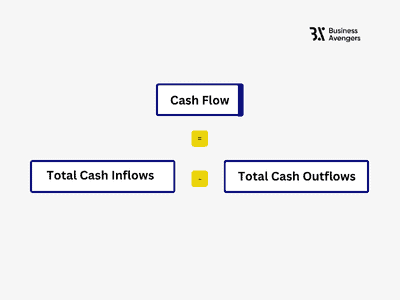
Cash Flow Forecasting Methods
To bridge the gap between accurate financial planning and unexpected shortfalls, the method you use must align with how your business operates and the level of detail in your records.
1. Direct Method
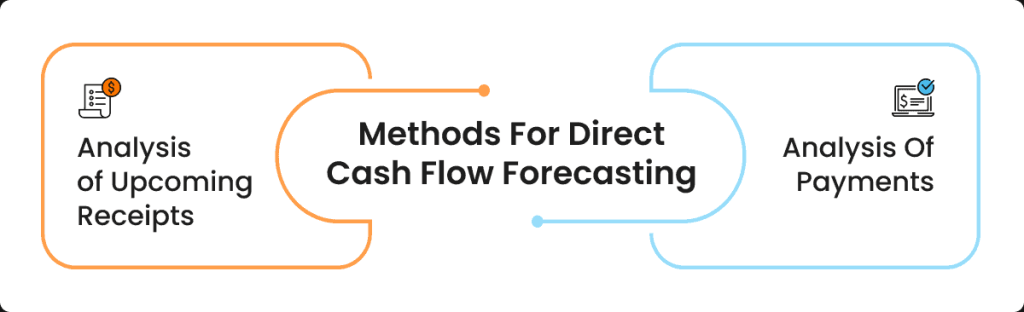
The direct method forecasts your cash position by listing expected cash inflows and outflows, in real terms, based on known or anticipated transactions. It’s ideal for short-term forecasts, helping you track liquidity with precision.
Suppose you own a retail store, service business, or operate with customers frequently. In that case, you need a cash flow forecast that helps you understand when exactly the cash comes in and when bills are due.
Platforms like MYOB, Xero, and CashFlow Manager allow you to use the direct method. These tools can sync with your invoices and expenses to give you a live cash flow dashboard.
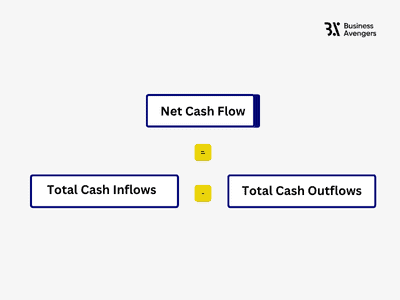
(Here, “inflows” are only the payments actually collected, and “outflows” are every bill with a due date.)
2. Indirect Method
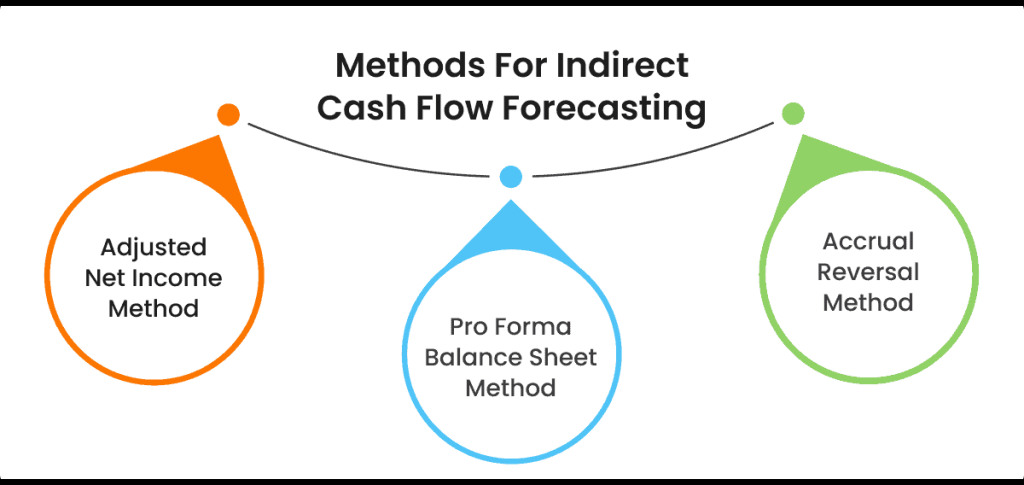
The indirect method is designed for you if your business tracks net income but needs to convert that into actual cash flow. Instead of listing receipts and payments, you start with the net profit and adjust for non-cash items, such as depreciation and changes in working capital, including accounts receivable, inventory, and accounts payable.
This method is ideal for creating monthly, quarterly, or annual forecasts, especially when preparing financial statements or aligning cash flow with profit-and-loss data. For example, suppose your net income last quarter was $25,000.
Operating Cash Flow = $25,000 + $5,000 – $7,000 + $3,000 = $26,000
So, while your profit says $25,000, your actual cash flow available is $26,000, a valuable insight when planning principal payments or investments.
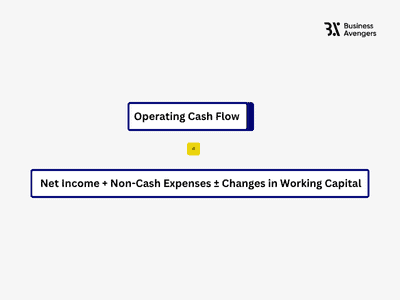
(Uses the base formula, but swaps “net income ± working-capital shifts” in place of raw receipts and payments.)
- + $5,000 (non-cash depreciation)
- – $7,000 (receivables increase)
- + $3,000 (payables increase)
3. Adjusted Net Income (ANI) Method
The ANI method is a cash flow forecasting method that refines your operating income by adjusting for changes in your balance sheet accounts. It combines the logic of the indirect method, giving you a more practical view of actual cash flow, especially when your accounting profits don’t reflect cash on hand.
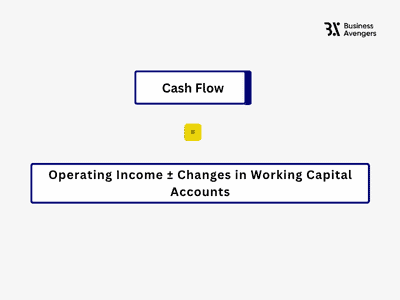
(Starts with operating income, then adjusts the base formula for receivables, payables, and inventory swings.)
4. Pro Forma Balance Sheet (PBS) Method
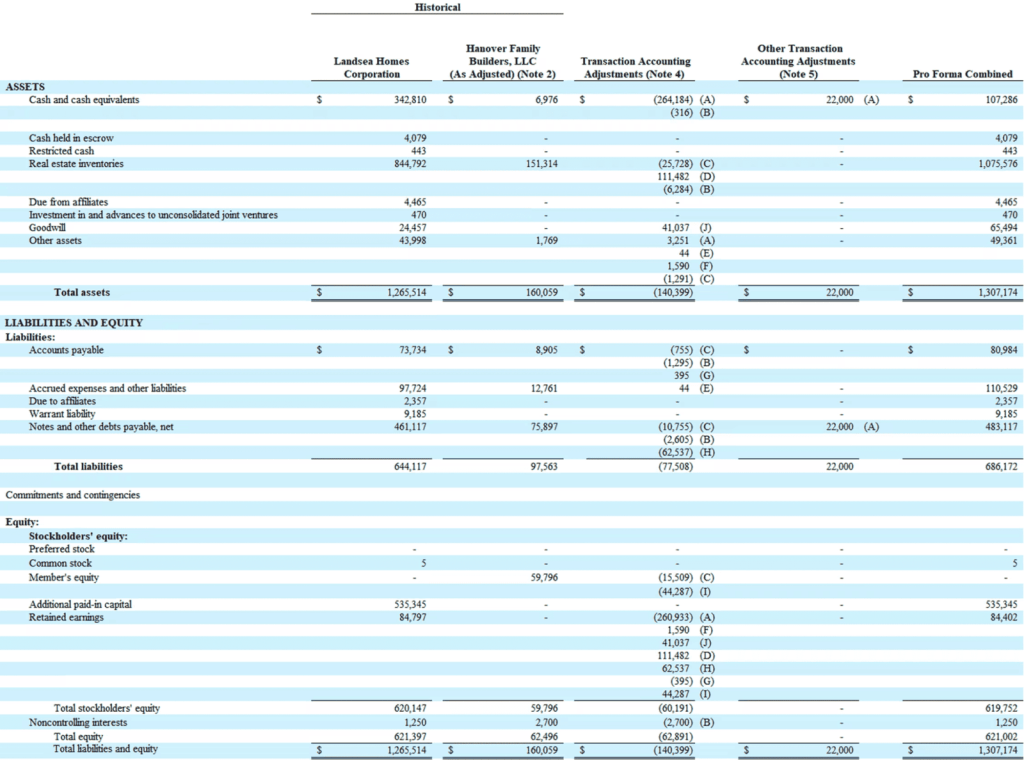
The PBS method uses projected balance sheets to estimate your future cash position. The final cash balance is determined after projecting all other accounts. It is ideal for preparing cash flow forecasts for loan applications, strategic budgeting, or investments.
It’s best used in conjunction with tools like Spotlight Reporting or Float, which integrate with Xero to automate the balance sheet forecasting process.
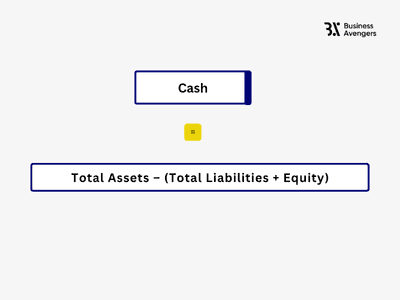
(Projects every balance-sheet line first, then plugs the base cash figure last for a full-year view.)
5. Accrual Reversal Method (ARM)
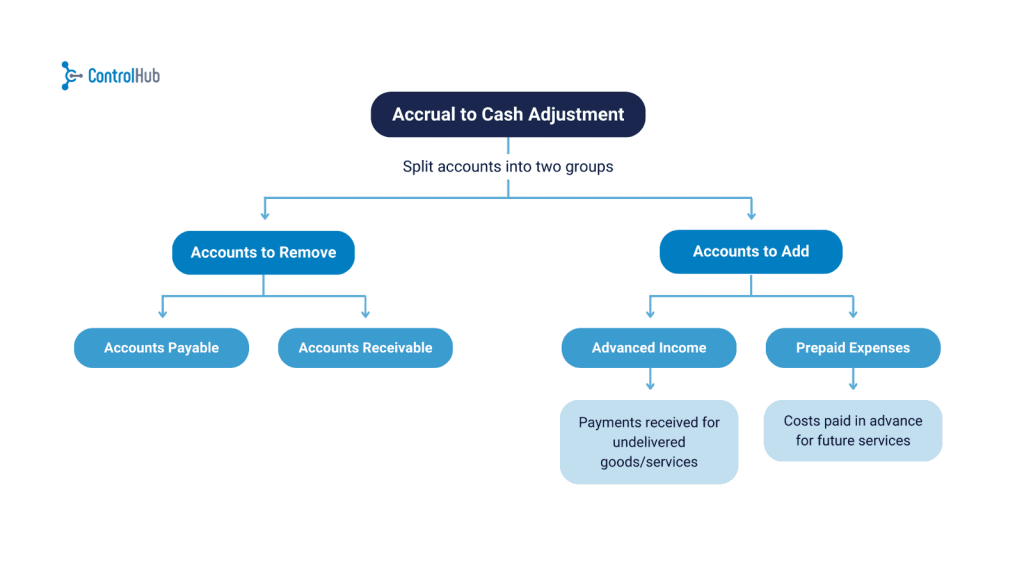
ARM is a short-term cash flow forecast method that helps you model when large accrued expenses or revenues will actually convert into cash movements. It works by reversing accrual entries, like a hefty supplier invoice that has not been paid, and applying statistical rules or timing patterns to predict when the cash will be withdrawn or deposited into your accounts.
Let’s say you have accrued $20,000 for employee bonuses but will only pay them in three instalments over the next quarter. ARM helps forecast those cash outflows accurately by distributing the cash effect over time.
It ensures your cash flow forecast model reflects real payment patterns, not just accounting theory.
Adaptive Insights or Castaway Forecasting supports ARM when dealing with high-volume, timing-sensitive accruals in industries like construction, healthcare, or SaaS.
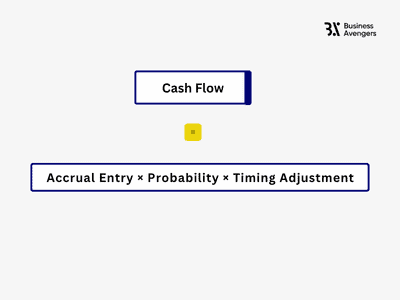
(Replaces accrual entries in the base formula with the cash dates you expect them to hit the bank.)
6 Key Benefits of A Cash Flow Forecast For Better Accounting
In tight cycles, a cash‑flow forecast shows whether timing or volume is your real problem. With a cash flow accounting forecast in place, you are not hoping the numbers work but preparing for the scenarios that most don’t. Cash flow forecasting becomes far more actionable with strategic CFO oversight.
1. Steer Through Economic Challenges in 2025
That isn’t a cash-flow “crunch”; it’s a timing mismatch your forecast should flag weeks earlier. A precise cash flow forecast helps you dissect that timing.
Here’s what a precise cash flow forecast lets you do:
In short, you stop reacting, and start anticipating.
- Plan for what’s owed before it’s payable
- Manage what’s earned before it’s banked
- Resequence expenses
- Adjust staff hours
- Hold back on discretionary spending based on projected availability
2. Achieve Financial Control & Clarity
Operating within tight cycles and lean teams provides a stabilising approach, where your cash flow forecast helps you identify patterns in how your business behaves under pressure. For example, you may discover that multiple vendor invoices land the same week as your team’s performance bonuses or that a slow patch follows seasonal demand.
With visibility, you begin to notice:
That clarity lets you act with control, not panic:
- How earnings and outflows align or collide on your internal calendar
- Overlapping costs like vendor invoices and team bonuses
- Slow patches that follow seasonal peaks
- Pause non-essential upgrades
- Shift marketing to a more opportune time
4. Build Stakeholder & Investor Confidence
An assertive cash flow forecast demonstrates your understanding of how your business operates and how it sustains itself. For banks, landlords, investors, or suppliers, that’s the kind of information that separates risk from reliability.
Here’s what it helps you demonstrate:
And for investors:
In short, it turns your pitch from abstract valuation into operational insight.
- You're mapping income against obligations—not relying on hope
- Loan repayments are timed and feasible
- Lease or vendor credit terms are backed by planning, not guesswork
- You’ve thought beyond next week
- They don’t fund spreadsheets—they fund your ability to anticipate
- Different forecast methods help you explain cash movement, gap management, and scalability
5. Boost Growth & Expansion
Strategic discipline must go hand in hand with financial control. That’s the currency stakeholders respect, and that is only possible when you know how to grasp the opportunities for your business to grow. With an accurate cash flow forecast, you can see exactly when you will have surplus funds and how long they will last.
Here’s how it supports your expansion plans:
It’s the difference between reacting to opportunity and being ready for it.
- Reveals the best window to invest in upgrades, team scaling, or market entry
- Helps fund equipment, campaigns, or new locations with predictability
- Removes guesswork from major decisions by ensuring growth doesn’t sacrifice stability
- Gives you the time and clarity to commit to your plans
- Strengthens your business case with numbers, not assumptions
6. Predict Cash Flow
Not every expense comes with a reminder. Office supplies, one-off client gifts, holiday bonuses, or team lunches, these aren’t emergencies, but they drain liquidity fast if you have not accounted for them.
A good cash flow forecast helps you:
That’s not luck; it’s operational awareness.
- Spot not just big bills, but small, frequent spend that adds up
- Layer low-frequency, high-impact costs into your projections
- Build a buffer reserve to absorb surprise spending
- Use rolling forecast models to flag when your cash cushion dips too low
- Cover instant needs without delaying payments or using credit
Different Types of Cash Flow Forecast
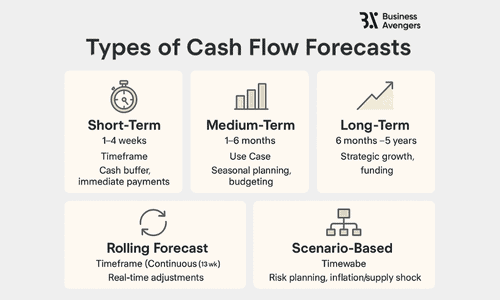
Nearly 80% of Australian SMEs reported experiencing cash flow challenges, primarily due to declining revenue, low emergency funds, and seasonal market fluctuations. To navigate these complexities, understanding the various types of cash flow forecasts is essential.
1. Short-term Forecasts
Short-term cash flow forecast help you stay in control of what’s directly in front of you, typically over the next 7 to 30 days. You can use it to track daily inflows and outflows, so you can make confident decisions about urgent moves without second-guessing your bank balance.
Here’s what it help you do:
Applied correctly, short-term forecasts can:
If you are using rolling cash flow forecasting methods, tools like Float, Fathom, or Xero’s short-term cash view integrate to reflect your real-time position across the next few weeks.
- Make confident calls on urgent moves, like next-day stock or staff hires
- See if you can afford delivery expansion or promotional spend
- Prioritise payments and protect your buffer cash
- Avoid using credit for small, short-term gaps
- Confirm if this week’s cash can support this week’s activity
- No assumptions but clear verfication
- Help you track fast cash burn (especially relevant for startups or seasonally busy SMEs).
- Prepare for immediate needs, such as replenishing POS systems, unplanned team overtime, or local sponsorship expenditures.
2. Medium-term Forecasts
A medium-term cash flow forecast gives you control over what’s coming, not just what’s due. Covering one to six months, it helps you plan around predictable patterns and scheduled expenses, the kind you can’t afford to ignore but don’t always see coming unless you map them.
Here’s how they help:
According to a survey, many small businesses struggle during “quiet” quarters, not because they don’t earn, but because they don’t prepare for delayed earnings cycles.
- Let you shift budgets, hold cash, or prep funding before the squeeze hits
- Help you decide when to bulk-buy, delay marketing, or top up reserves
- Add a timing layer that short-term or annual views miss
- Prepare you for seasonal mismatches common among Australian SMEs
3. Long-term Forecasts
A long-term cash flow forecast stretches beyond six months, sometimes up to five years, giving you a way to pressure-test growth plans, capital raises, and multi-phase expansion.
You use long-term forecasting when you need to model how your cash position will behave if you open a second location, scale your team in waves, or lock in a multi-year lease. It’s how you answer questions like:
In 2025, Australian SMEs pursuing growth are expected to encounter tighter capital access and slower customer payment cycles. A long-term cash flow forecast model lets you play forward those assumptions before you commit to them.
Here’s what it enables you to do:
That’s what makes it a strategic tool, not just a financial one.
- “Can I afford to defer revenue in Year 1 to gain market share by Year 2?”
- “Do I need a funding round to make it past Phase 3 of rollout?”
- Time big moves, like new market entry, new debt, or major investments
- Go beyond totals and focus on timing
- Use scenario planning to model best, conservative, and worst-case outcomes
- Turn your forecast into a strategic decision-making tool
4. Rolling Forecasts
A rolling cash flow forecast isn’t static. You are not setting numbers for the quarter and forgetting them. It’s a living model. Every time a new week or month passes, you extend the forecast forward. That way, you always have a clear window into the next 13 weeks (or more).
Here’s how it helps:
If you are applying any cash flow forecasting method, this one keeps your cash flow honest, and aligned with what’s actually happening, not what you guessed six weeks ago. Learn how rolling forecasts compare to traditional budgets and how each impacts cash flow planning.
- Updates sales projections and supply delays in real time
- Shifts outgoing payments before they create strain
- Tracks reality and not outdated assumptions
- Supports tight working capital management and fast-moving decisions
- Keeps your forecast model aligned with what’s actually happening
5. Scenario-based Forecasts
You can’t control inflation. Or supplier hikes. Or delayed client payments. However, you can run the numbers for each one. A scenario-based cash flow forecast helps you do precisely that.
Here’s how it works:
This method helps you tie your cash flow forecast model to real business decisions: from pricing strategy to risk mitigation, from short-term survival to long-term positioning.
- Builds a base case forecast for your most likely cash flow path
- Models downside risks like a 10% cost hike or late client payments
- Tests upside risks, such as rapid hiring or market expansion
- Shows how shocks impact margins, buffer cash, and cash runway
- Helps you adjust pricing, manage risk, and make strategic decisions
Cash Flow Forecasting Should Be A Financial Advantage, Not A Task
You have seen how different cash flow forecasting methods solve other business problems: staying liquid, growing with confidence, and preparing for a shock. However, you have seen that forecasting isn’t like a bookkeeping checklist. It’s risk control. It’s investment timing.
With Business Avengers, you can stop wrestling with old models and start using forecasts as decision tools, not chores. Contact us today!
Want to talk any of this through with a finance leader who has run these functions?
Was this article helpful?

Dilip Kherajani
CPA, Australia and Financial Strategist
20+ years of experience in Finance across multiple industries and geographies, 10+ of them as a CFO.