Scaling Without Headcount: Why Australian Corporates are Pivoting to AI-Powered Outsourcing
Scaling Without Headcount: Leveraging AI-Powered Outsourced Accounting Services for Australian Corporates
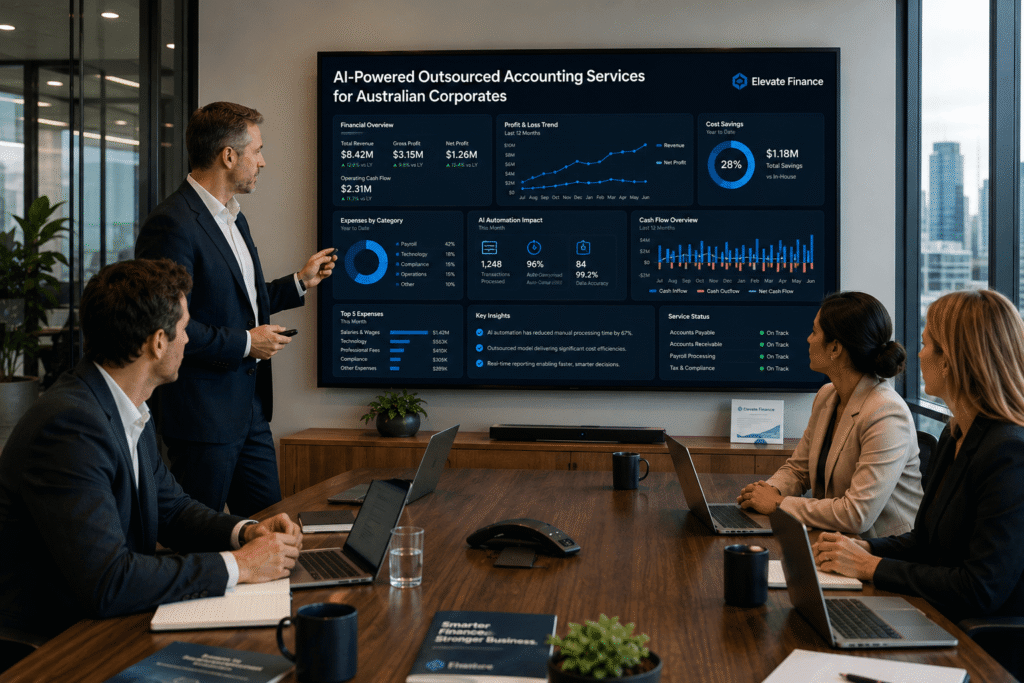
As Australian businesses navigate modern challenges, many corporates are shifting their financial strategies towards AI-powered outsourcing to streamline operations while maintaining efficiency. This article will delve into how these innovative solutions not only promote cost savings but also lead to significant improvements in efficiency and competitive advantages. Readers will gain insights into the mechanisms driving corporate finance scaling through AI-powered outsourced accounting services. Specifically, this discussion will unravel the urgent need for firms to enhance their operational capacity without the burden of increasing headcount. Key sections will outline efficiency improvements, cost implications, benefits of outsourcing, and tailored strategies for successful implementation.
Efficiency Improvements
The introduction of AI-powered outsourced accounting services has revolutionized financial operations within Australian corporates. By automating repetitive tasks and utilizing real-time data analytics, organizations can enhance their operational efficiency significantly. This approach leads to smarter resource allocation, improved cash flow management, and faster decision-making processes. AI's capability to process vast arrays of financial data enables corporations to glean insights that drive strategic planning and operational adjustments.
Furthermore, these services offer scalability that adapts to fluctuating business demands, ensuring that companies only pay for the resources they need. As firms increasingly resort to such flexible frameworks, they can redirect their internal efforts towards core business activities, allowing greater focus on strategic growth initiatives.
Cost Savings

Optimizing costs is one of the primary motivations behind the move towards outsourced accounting. Companies find that outsourcing often incurs lower labor costs compared to hiring additional in-house staff, effectively reducing their financial overhead. By eliminating the various expenses associated with employment, such as benefits and training, businesses can achieve significant cost savings while maintaining compliance and operational integrity.
The average cost of employing an entry-level finance resource over three years can be around $95,000. In contrast, opting for outsourced services can deliver similar competencies for a fraction of that cost. Predictable monthly fees offered by outsourcing firms enable better budgeting accuracy and planning flexibility.
This table underscores how businesses can pivot towards more financially sound strategies through outsourcing. Adopting this structure allows firms to allocate resources more effectively and realize better financial outcomes.
Competitive Advantages
AI-powered outsourcing does not just serve to reduce costs; it brings numerous competitive advantages as well. This ensures that financial processes remain robust and compliant with evolving legislation, which helps mitigate risks.
Moreover, the strategic insights provided by sophisticated AI analytics deliver a clearer financial picture, facilitating informed decision-making. Companies can focus on their core business activities, thereby enhancing productivity and operational agility. This competitive positioning is increasingly vital in the modern marketplace, where agility and responsiveness to complex consumer demands are paramount.
Why Are Australian Corporates Choosing AI-Powered Outsourced Bookkeeping?
Various factors drive Australian corporates towards opting for AI-powered outsourced bookkeeping. Primarily, organizations are looking for cost-efficiency integrated with access to multi-skilled teams capable of handling complex financial tasks. These outsourced solutions allow businesses to scale their operations in line with fluctuating workload demands, which is crucial in today's unpredictable economic climate.
Additionally, the flexibility offered by outsourcing results in efficient resource usage, equipping companies to better adapt to crises or surges in market demands. Corporates are finding that by embracing these modern financial solutions, they can maintain a substantial edge over their competitors.
Benefits
Outsourced bookkeeping services provide a multitude of benefits, extending beyond mere cost savings. Primarily, these services free internal teams from mundane financial tasks, allowing them to concentrate on strategic initiatives that drive business growth. Reliable financial reporting becomes a cornerstone for firms, empowering them to interpret performance metrics accurately and make data-driven decisions.
Flexibility also plays a critical role as outsourced services can scale up or down based on organizational needs, accommodating growth without the inherent limitations of traditional hiring processes. This adaptability leads to improved time savings and resource allocations across key departments.
Cost Implications
Exploring the cost implications of outsourcing versus traditional hiring reveals compelling insights. Corporates must compare the hidden costs associated with in-house teams—such as recruitment, training, and onboarding—with the predictable, lower costs of outsourcing. Outsourced solutions also eliminate various operational overheads, including office space and technology implementation expenses, further enhancing overall cost management.
Additionally, employing outsourced solutions ensures that labor costs are optimized as the need for overstaffing during peak periods is eliminated. By understanding these financial dynamics, companies can make informed decisions on how to structure their accounts departments for optimal performance without compromising quality or accuracy.
Efficiency Improvements
Revisiting the enhancements that AI brings to outsourced accounting illustrates how automation can vastly improve operational efficiency. Since automated systems significantly reduce manual errors, companies benefit from clearer cash flow management processes and enhanced risk management strategies.
Furthermore, with the use of AI-driven tools, businesses can monitor their financial data in real-time, streamlining budgeting and forecasting models while ensuring compliance with pertinent regulations. This level of operational efficiency not only mitigates risks but also fosters a culture of continuous improvement, where businesses can focus on innovation and value creation.
What Benefits Does AI Bring to Outsourced Accounting Services?
AI brings substantial benefits to outsourced accounting services that significantly enhance the overall quality of financial management. The primary advantages include:
These benefits illustrate AI's transformative capabilities in the realm of outsourced accounting, thereby enabling firms to achieve higher levels of operational excellence and customer satisfaction.
- Cost Efficiencies: AI significantly reduces overhead and operational costs by automating numerous manual processes.
- Enhanced Accuracy: Algorithms minimize human error risks, ensuring that financial records are precise and reliable.
- Streamlined Operations: Through automation, businesses experience quicker transaction processing times, leading to improved cash flow management.
How Does Outsourcing Support Corporate Finance Scaling Without Increasing Staff?
One of the most critical aspects of outsourcing is its ability to support corporate finance scaling without necessitating the hiring of additional staff. This scalability is particularly beneficial during times of business expansion or increased workload periods when firms can adjust their partnerships with outsourcing providers, maintaining operational flexibility without the burden of steering through hiring processes.
Outsourcing thus provides access to expert competencies and nuanced skill sets on demand, enabling businesses to meet evolving needs rapidly. By leveraging AI-powered tools within outsourced services, companies can thrive in a competitive landscape where agility is crucial.
How Does AI-Driven Automation Enhance Accounting Process Efficiency?
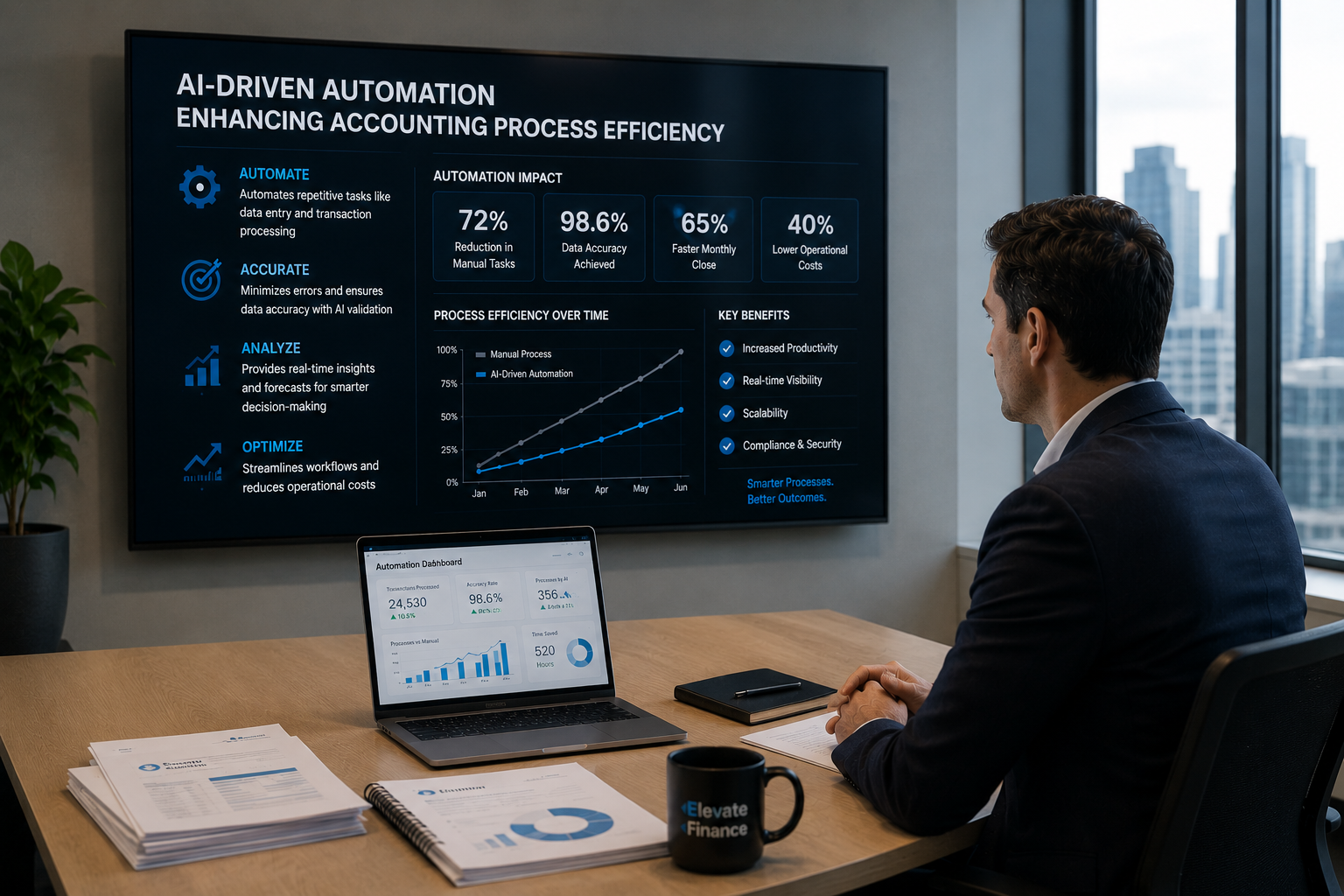
AI-driven automation has introduced phenomenal enhancements to accounting process efficiency. Key advantages include:
Each of these components not only optimizes internal processes but empowers businesses with greater control and clarity over their financial landscapes.
- Operational Cost Reductions: The automation of routine tasks allows companies to cut down on labor expenses significantly.
- Speed of Transaction Completions: AI expedites routine accounting functions, ensuring quicker workflows for financial transactions and reporting.
- Fraud Detection Improvements: Advanced algorithms effectively identify discrepancies in financial data that could suggest fraudulent activity.
Which AI Technologies Are Central to Automated Bookkeeping Solutions?
Several AI technologies are pivotal to revolutionizing bookkeeping solutions. The most impactful include:
Employing these technologies within outsourced services equips finance departments with the necessary tools to navigate an increasingly complex economic landscape.
- Intelligent Accounting Automation Systems: These platforms manage financial operations with minimal human interference, enhancing efficiency.
- Optical Character Recognition (OCR) Technologies: OCR aids in the automatic transcription of invoices and receipts, speeding up data entry processes.
- Predictive Analytics for Cash Flow: This technology leverages historical data to forecast future financial scenarios, improving budgeting capabilities.
What Are the Measurable Impacts on Error Reduction and Financial Visibility?
The implementation of AI in outsourced accounting services translates into measurable improvements regarding error reduction and financial visibility. Traditional accounting methods often carry risks of human error, which can lead to substantial financial misstatements. AI mitigates this risk through automated checks and balances, ensuring accuracy over long stretches of operations.
Moreover, AI-powered tools provide enhanced financial visibility by generating comprehensive reporting capabilities that present useful insights into key performance metrics. Companies leveraging these advancements can make informed financial decisions more effectively, resulting in increased stakeholder confidence and strategic alignment.
What Are the Cost Benefits of AI-Powered Outsourcing Versus Increasing Headcount?
AI-powered outsourcing not only streamlines operations but also provides distinct financial advantages compared to traditional hiring. Comparisons of costs elucidate:
Utilizing AI-enhanced outsourced services opens new doors for corporates to innovate and save while navigating through dynamic market conditions.
- Cost Comparisons Highlights: Outsourcing services allow firms to avoid exorbitant employment costs associated with full-time staff, especially considering the additional overheads involved.
- Overhead Costs Eliminated: Utilizing outsourced services ensures that there are significantly fewer expenses linked to maintaining a workforce.
- Long-term Budgeting Benefits: Fixed pricing models from outsourcing firms provide stability and predictability for businesses in financial forecasting.
How Do Cost Structures Compare Between In-House Teams and Outsourced AI Solutions?
Understanding the differences in cost structures between in-house accounting teams and outsourced AI solutions reveals striking insights. For instance, employing an in-house financial team often averages about $95,000, factoring in salary, benefits, and other associated costs.
By contrast, many outsourced solutions can start as low as $1,800 per month. This significant discrepancy highlights the financial viability of outsourcing as a strategic choice for scaling corporate finance functions efficiently and cost-effectively.
Such comparisons draw a vivid picture of the financial advantages behind outsourcing strategies that many Australian corporates are adopting to maneuver through complex business landscapes.
What Case Studies Illustrate Return on Investment With AI Outsourced Accounting?
Real-world case studies illustrate that investment in AI-powered outsourced accounting can substantially enhance financial performance and operational viability. For instance, companies that transitioned to outsourced accounting solutions reported quantifiable ROI metrics post-implementation, highlighting:
These instances underscore how embracing AI-powered solutions can lead to substantial returns on investment.
- Example Case Studies of Cost Efficiency: Many organizations saved approximately 30% in operational costs through outsourcing.
- Quantifiable ROI Metrics: Enhanced cash flow visibility improved financial forecasting accuracy, translating into better financial health.
- Relevant Australian Corporate Experience: Firms that utilized outsourced accounting methods demonstrated positive fiscal transformations.
How Do Australian Corporates Ensure Security and Compliance in AI Outsourced Finance?
Ensuring security and compliance remains a priority for Australian corporates leveraging AI-powered outsourced finance. Outsourcing firms deploy rigorous data security protocols to safeguard sensitive financial information and maintain the integrity required by regulatory bodies.
Regular compliance monitoring processes ensure that businesses adhere to local regulations, mitigating risks associated with non-compliance. By engaging expert insights on local regulatory frameworks, organizations can navigate complexities with confidence.
What Measures Secure Data Integrity and Regulatory Compliance?
To maintain data integrity and regulatory compliance, outsourcing firms implement several key measures, which include:
These safeguards highlight the seriousness with which corporates treat financial data protection, ensuring stakeholders remain informed and secure.
- Data Encryption Methods: Sensitive information is encrypted to protect against unauthorized access.
- Incident Response Plans: Established frameworks enable prompt actions in case of security breaches.
- Access Controls and Authentication: Limitations on sensitive data access ensure information remains secure.
- Regular Audits for Compliance: Periodic reviews uphold adherence to regulations, minimizing potential liabilities.
How Does Outsourcing Mitigate Risks Compared to Traditional Accounting Models?
Outsourcing emerges as a significant risk mitigation strategy compared to traditional accounting models. Engaging with seasoned experts from outsourced firms not only enhances accountability but significantly lowers reliance on individual employees, which can be detrimental in instances of sudden turnover.
Furthermore, the cost-effectiveness offered by outsourced services cushions companies from economic downturns, reinforcing financial resilience through adaptable workforce solutions.
How Can SMEs and Accounting Firms Implement AI-Powered Outsourcing Effectively?
For small and medium enterprises (SMEs) and accounting firms aiming to implement AI-powered outsourcing successfully, a structured approach is vital. Key implementation strategies include:
Each of these steps prepares SMEs to embrace a successful transformation that dovetails with their overall operational strategy.
- Assessing Current Processes: Evaluate existing accounting procedures to identify areas ripe for automation.
- Choosing Suitable AI-Powered Tools: Select tools that align with business needs and enhance financial functions effectively.
- Establishing Strong Partner Relationships: Collaborate with trusted outsourcing providers who evidence expertise in AI applications in finance.
What Are the Step-by-Step Guides to Adopting AI Bookkeeping Solutions?
A practical guide to successfully adopting AI bookkeeping solutions should follow crucial steps, including:
These actionable steps ensure seamless transitions to AI-powered bookkeeping frameworks that yield long-term efficiencies.
- Engaging with and Training the Internal Team: Foster a culture accepting of technological integration to ease transitions.
- Maintaining Compliance During Implementation: Ensure adherence to regulatory requirements throughout the process.
- Regular Performance Monitoring and Optimization: Periodic evaluations offer insights for improvement and ensure continued alignment with business goals.
Which Financial Automation Tools Best Support Scalable Corporate Finance Functions?
Identifying the right financial automation tools is essential for supporting scalable corporate finance functions. Preferred tools typically feature:
Leveraging these platforms effectively equips businesses to adapt and thrive in an increasingly digital-oriented financial landscape.
- Robust Platforms with Comprehensive Features: To handle various accounting tasks, from invoicing to cash flow management.
- Benefits of Virtual Finance Teams: These tools enable 24/7 accessibility and remote collaboration, vital in a global marketplace.
- User-Friendly Interfaces: Simplified systems enhance usability, promoting better engagement across the organization.
What Future Trends Will Influence AI-Powered Finance Scaling in Australia?
Anticipated future trends indicate that the integration of AI in financial operations will continue to evolve rapidly. These trends include:
These trends illustrate the transformative power of AI in reshaping how Australian corporates approach finance operations moving forward.
- Generative AI's Impact on Forecasting: Enhanced predictive capabilities will reshape financial planning paradigms.
- Privacy-Preserving AI Techniques: As data privacy regulations tighten, innovative AI approaches will ensure compliance without compromising functionality.
- Democratization of AI Tools for Broader Usage: Increased accessibility of AI technologies will enable smaller firms to leverage advanced solutions previously reserved for larger corporations.
How Are Emerging AI Innovations Shaping Outsourced Accounting Services?
Emerging innovations in AI are significantly shaping how outsourced accounting services are structured and delivered. Advancements in both machine learning and natural language processing enhance service delivery and operational efficiency, ultimately benefiting client outcomes.
The role of AI in enhancing service delivery ensures that invoices are processed faster, and data insights are generated more accurately. As firms increasingly adopt cutting-edge AI technologies, the potential for significant operational improvements continues to grow, making the case for outsourcing ever more compelling.
Want to talk any of this through with a finance leader who has run these functions?
Was this article helpful?

Dilip Kherajani
CPA, Australia and Financial Strategist
20+ years of experience in Finance across multiple industries and geographies, 10+ of them as a CFO.